
 1270
/ 7
Min Read



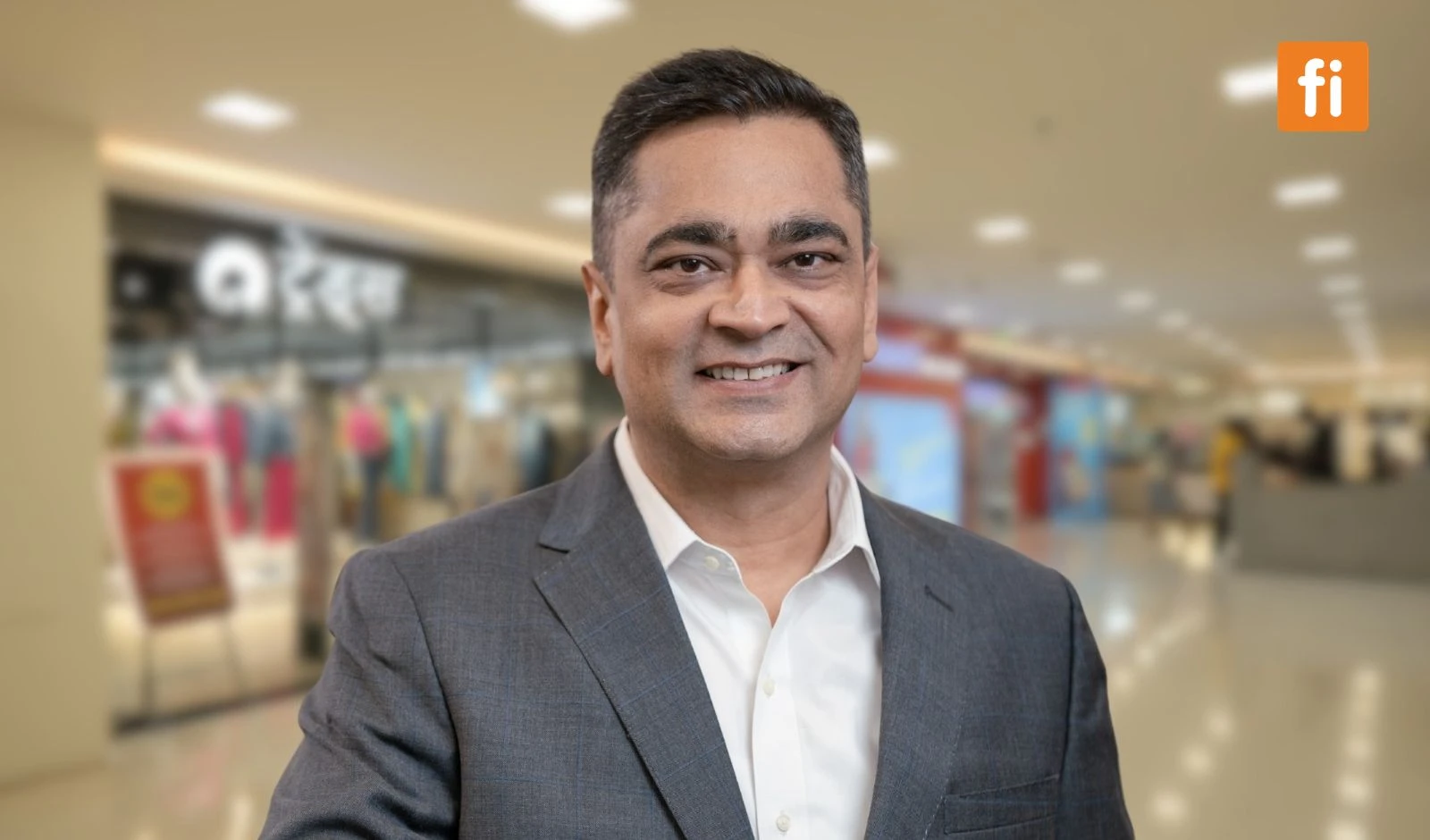
From the evolution of high-street retail to today’s omnichannel ecosystems, Rajneesh Mahajan has remained closely aligned with India’s shifting consumer scene. As CEO of Inorbit Malls and author of Simple, Not Easy, Mahajan shares perspectives on the fundamentals shaping retail success—spanning franchising, evolving consumer expectations, and the rise of malls as experience-led destinations.
What inspired you to write this book at this stage of your career, and what key message do you hope retail professionals and entrepreneurs will take away from it?
The idea for the book goes back to a presentation I delivered at a conference in 2022 where I attempted to distil my learnings from retail into a few core principles. I had called that presentation Simple, Not Easy, a phrase that stayed with me over the years because it captures the essence of retail.
As I reflected on more than two decades in the industry, I realized that while retail may appear straightforward in theory, it demands immense discipline, consistency, and attention to detail in practice. The book is an attempt to share those learnings in a candid and practical way.
For retail professionals and entrepreneurs, the key message is that success in retail rarely comes from shortcuts or momentary innovation. It comes from mastering the fundamentals and executing them consistently over time.
How would you compare the retail landscape of the early 2000s with the contemporary retail ecosystem we see today?
When I began my career, retail in India was still at a very early stage. Demand existed, but supplies were limited. For instance, there may not have been as many coffee shops, but the desire for that experience was already there. Consumers were curious, open to experimentation, and there were relatively few organized players catering to these latent needs.
In many ways, there was a sense of captive demand. With limited options available, customers were willing to engage with whatever new formats entered the market.
Today, the landscape is far more evolved and competitive. There are significantly more brands, more formats, and far greater accessibility. As a result, consumers have become far more discerning. It is no longer enough to simply meet demand, as a brand one has to actively create it and continuously stay relevant.
Retail has also become more structured, with organized malls, global and domestic brands, and omnichannel integration shaping the ecosystem. While the scale and complexity have increased, the core principles remain the same. The difference is that execution today requires a much deeper understanding of the consumer, sharper differentiation, and far greater consistency.
In Simple, Not Easy, you highlight the paradox of why simple ideas often outperform complex retail concepts. From your experience, why does disciplined execution of fundamentals matter more than innovation alone?
Retail often attracts entrepreneurs because the model appears simple: source the right product, price it well, and find a good location. However, what is often underestimated is the complexity involved in executing these fundamentals consistently.
Many businesses focus heavily on new ideas or innovation, but innovation alone cannot sustain a retail business. What truly drives long-term success is operational discipline, alignment across functions, and the ability to execute the basics with consistency.
Retail is ultimately a business of details. Even small gaps in execution can compound over time. That is why mastering the fundamentals often proves far more powerful than chasing complexity.
What leadership principles have guided you in building malls that remain relevant and engaging for consumers over the years?
One of the most important principles is recognizing that malls are not merely retail spaces; they are aspirational destinations where people come to spend time, socialize, and experience the environment.
To remain relevant, malls must continuously evolve alongside the infrastructure and lifestyle changes happening around them. As cities upgrade their airports, offices, and residential spaces, consumer expectations also rise.
Leadership in this space therefore requires a long-term perspective constantly upgrading the experience, maintaining operational excellence, and ensuring that the mall continues to deliver value to both consumers and retailers.
From your perspective, how has the franchising model contributed to the growth of organised retail and the scaling of brands across different markets?
Franchising has been an important catalyst for the growth of organized retail in India. It allows brands to expand into multiple markets while leveraging the local expertise and entrepreneurial drive and capital investment of franchise partners, which helps accelerate growth.
At the same time, the model requires strong alignment between the brand and the franchisee. Retail success does not come from simply replicating a store format; it requires discipline in maintaining brand standards, operational processes, and customer experience.
When executed well, franchising enables brands to scale efficiently while ensuring consistency across markets.
For emerging retail brands and franchise partners looking to enter malls today, what factors are critical for building a successful and sustainable franchise-led retail business?
For emerging brands, the most important step is to focus on building a strong brand rather than just selling a product. Retail success is not driven by a single good idea; it is built through consistency and clarity of positioning.
Entrepreneurs must also understand that retail requires patience and discipline. Staying committed to the chosen strategy and avoiding frequent changes in direction is crucial.
Equally important is operational rigor from inventory management to customer experience. A sustainable franchise-led business is built on strong fundamentals and long-term commitment.
The book was recently launched at Crossword Bookstores, what were some of the key insights or discussions from that event that resonated most strongly with the retail and business community?
The conversation focused largely on the underlying philosophy of the book and the realities of building businesses in the retail sector. One of the themes that resonated strongly was the idea that retail success often lies in mastering the basics rather than chasing complexity.
We also discussed how the industry continues to attract entrepreneurs because of its apparent simplicity, but the real challenge lies in sustaining consistency and operational discipline over time.
Many participants related to this perspective, particularly the notion that retail may appear straightforward from the outside but requires deep commitment and attention to detail to succeed.
With the rapid growth of e-commerce and digital platforms, physical retail has had to constantly reinvent itself. How do you see shopping malls evolving to remain relevant in the age of digital commerce?
The role of malls has been gradually evolving from purely transactional spaces to experiential destinations. As e-commerce handles more functional purchases, malls are increasingly becoming places where people come for experiences, social interaction, and leisure.
Formats such as food and beverage, entertainment, gaming, and hobby-driven experiences will continue to gain greater prominence because they encourage on-ground consumption.
The malls of the future will therefore focus more on creating immersive environments and community experiences that cannot be replicated online.
Having spent over 26 years in the retail industry, how do you believe your journey and experiences can inspire and guide the next generation of retail professionals?
One of the advantages of entering the industry at an early stage was the opportunity to gain exposure to multiple aspects of the business. Working across functions helped build a holistic understanding of how retail operates.
I hope that sharing these experiences encourages younger professionals to remain curious and open to learning across different dimensions of the industry.
Retail offers immense opportunities for those willing to understand its nuances and commit to the discipline required for long-term success.
Looking ahead, what major trends do you foresee shaping the Indian retail industry over the next five to ten years, particularly in areas such as experiential retail, technology integration, and consumer engagement?
India’s retail landscape will continue to be shaped by urbanization, rising disposable incomes, and evolving consumer aspirations. This will naturally lead to greater premiumization and higher expectations around experiences.
Experiential retail will play a much larger role, particularly formats that encourage on-ground engagement such as dining, entertainment, and community-driven activities.
In addition, Tier 2 and Tier 3 cities are likely to become significant growth markets for organized retail, driven by rising aspirations and relatively lower penetration of retail infrastructure.