2043
/ 5
Min Read



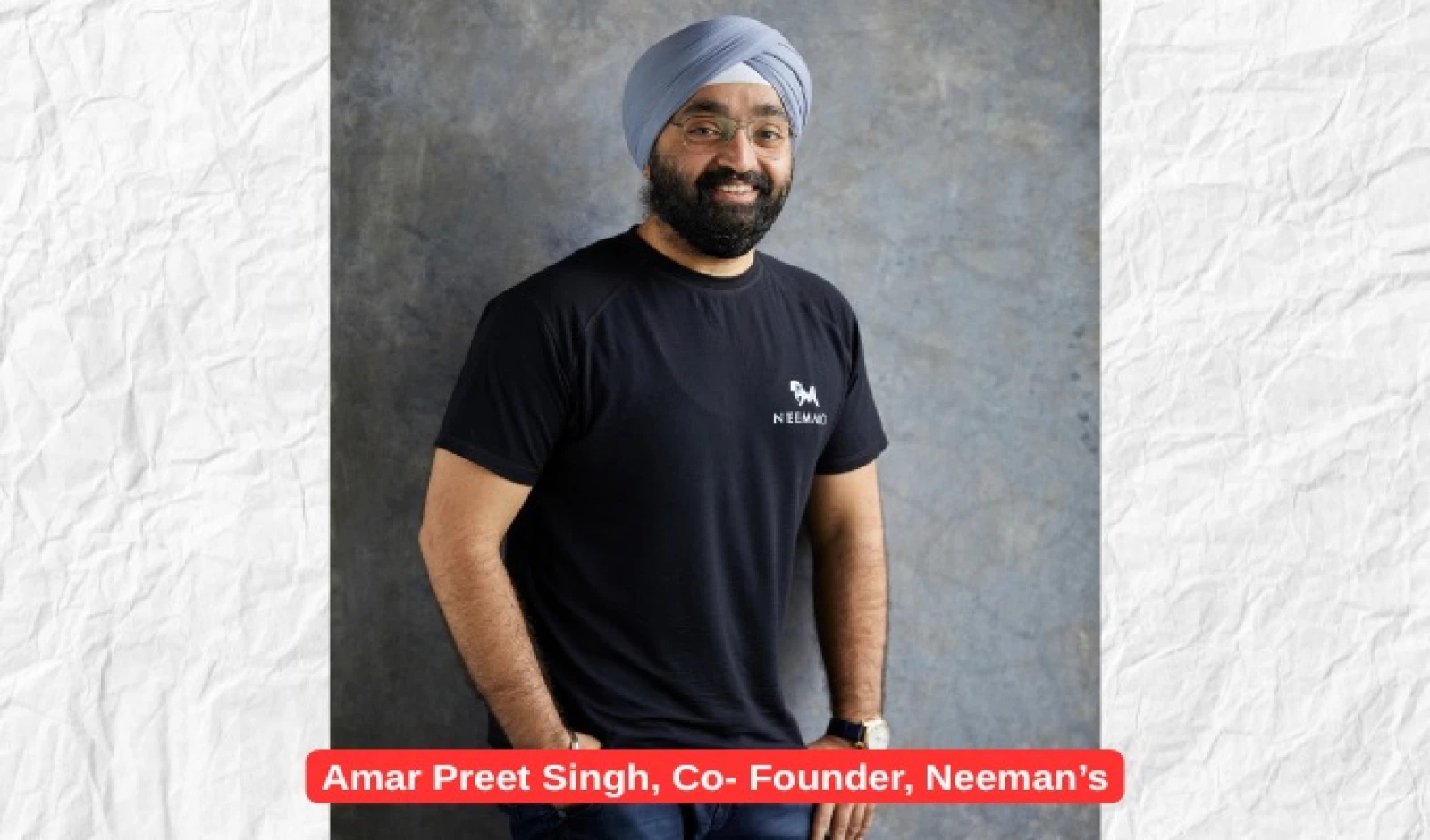
Founded with a vision to blend comfort, sustainability, and style, Neeman’s has quickly risen to become a disruptor in India’s footwear industry. Co-founder Amar Preet Singh shares the brand’s journey, growth strategy, and what lies ahead.
- Tell us a bit about your entrepreneurial/professional journey.
Every successful brand has a story — ours is one of resilience, belief, and persistence. We started from scratch with nothing but a vision: to create footwear that blends comfort, style, and sustainability. The journey wasn’t easy. We heard "no" far more often than "yes." Doors closed, opportunities slipped — but every rejection became a stepping stone. Each setback fueled our determination to refine, improve, and push harder.
What began as a dream eventually turned into a brand that carved a space in a highly competitive industry dominated by giants. Through sheer grit, innovation, and an unwavering commitment to quality, Neeman’s earned the most important validation of all — from our end consumers. Today, we stand as proof that perseverance can transform a “no” into the “next opportunity.”
- When and how did Neeman’s start? What was the inspiration?
“The Spark”
It was in 2016 that Taran and I started asking a simple question: Can India make the world’s most comfortable shoes? That question sparked months of research, learning, and experimentation. Finally, in 2017, after over 200 prototypes and countless trials and errors, we crafted our first perfect fit — and that was the beginning of Neeman’s.
- What is the USP of the brand, and how has the experience been so far?
Our USPs lie in three key areas:- Comfort that lasts all day – Footwear should move with you, not against you.
- Sustainability at the core – We use materials and processes that respect the planet.
- Designs that stand out – We blend global trends with thoughtful innovation.
The journey has been both challenging and rewarding — building a brand that people connect with on values and comfort alike.
- How was the brand’s online-to-offline journey? Why was it necessary?
Our online-to-offline transition was a natural step toward deepening our consumer connection. Online channels gave us reach and validation, but offline retail allows customers to experience our products firsthand — the comfort, the design, and the story.
Opening stores wasn't just a business decision; it was about creating immersive touchpoints where our values of innovation, sustainability, and wearability come alive. Each store is a community-building space for like-minded consumers.
- What are the pros and cons of an omnichannel approach?
I’ve always believed that the customer comes first — above everything else. An omnichannel strategy enhances the customer experience, builds loyalty, and provides actionable data insights. While it brings operational complexity, the benefits — seamless experience, better engagement, and stronger brand presence — far outweigh the challenges.
- What is your management mantra?
Empowerment. And the resilience to go beyond the task at hand. These three principles guide my leadership style.
- What are Neeman’s expansion plans for FY26?
We aim to expand to 100 stores by FY 2026–2027.
We looked at franchising from two key perspectives. First, as a growth driver — it helps us scale rapidly by partnering with local entrepreneurs who understand their regions. Second, as a brand-building tool — it increases our visibility, reinforces trust, and brings Neeman’s closer to consumers across India. So far, the response has been extremely encouraging, with partners who share our passion for sustainable and comfortable footwear.
- Where do you see Neeman’s five years from now?
In five years, we envision Neeman’s as a publicly listed company, rooted in our core values of comfort, sustainability, and design. Growth for us isn’t just about numbers — it's about value-driven scale. We want to lead a movement where innovation, responsibility, and style go hand in hand.
- How has the Indian footwear market evolved over the last five years?
The Indian footwear market experienced significant ups and downs — from production declines to COVID-related consumption drops. However, it has bounced back strongly, with a CAGR of 8–10% from 2022 to 2025.
We’ve also seen a major shift toward non-leather and athletic footwear, reflecting evolving consumer preferences.
- What are three trends defining the Indian footwear market today?
- Minimalist and versatile design – At Neeman’s, we focus on creating all-day wear that feels effortless.
- Comfort-focused styles – Slip-ons, loafers, sneakers, clogs, and ballet flats are gaining popularity.
- Sustainability as a core expectation – Today’s consumers want fashion that’s both stylish and responsible.
- How will the market evolve over the next five years?
The Indian footwear market is expected to grow at a CAGR of 10% over the next five years, driven by urbanization, rising fashion consciousness, and increased focus on comfort.
India is emerging as a strategic market for global brands — led by a young, fashion-aware population. Key growth factors include the rise of athleisure, health-conscious lifestyles, and the continued expansion of online retail.
- How has Neeman’s integrated technology for growth and expansion?
In today’s digital era, technology is indispensable. It improves operational efficiency, enables instant communication, and provides access to rich consumer data. For us, it has played a vital role in streamlining our processes and scaling sustainably.