1735
/ 9
Min Read



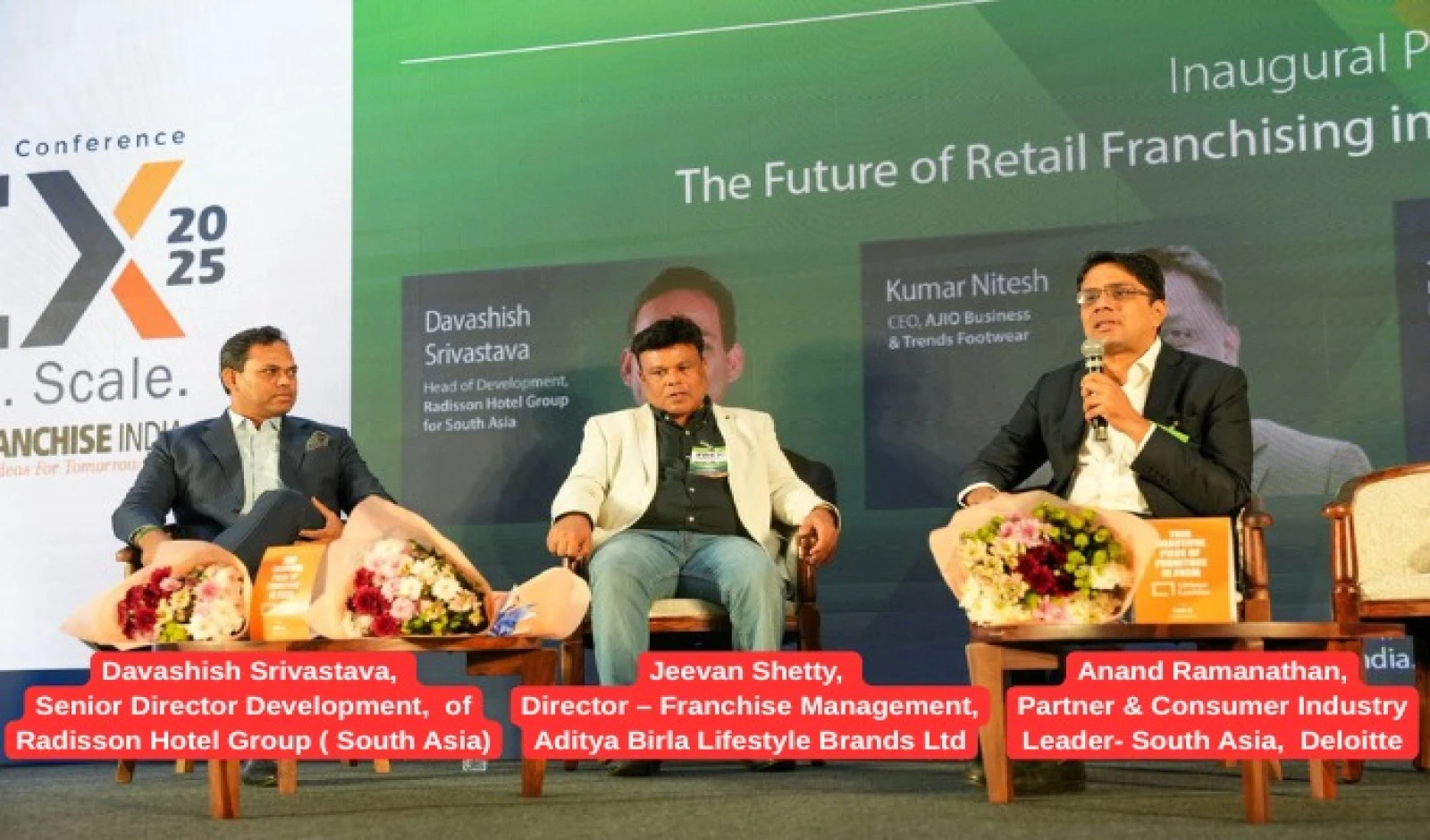
India’s consumption landscape is undergoing a structural reset. A youth-led surge—millennials and Gen Z now account for the lion’s share of spending—combined with rapid retail and hospitality adoption in Tier-2 and Tier-3 cities, is forcing brands to rethink formats, partnerships and operating models. In a Panel discussion recently concluded at FREX Conference in Banagalore, moderated by Anand Ramanathan, Partner & Consumer Industry Leader- South Asia, Deloitte, Davashish Srivastava, Senior Director Development, of Radisson Hotel Group ( South Asia) and Jeevan Shetty, Director – Franchise Management, Aditya Birla Lifestyle Brands Limited unpacked what brands must do to capture this next wave of growth.
Youth, aspiration and a new consumption engine
Anand framed the debate with a striking data point: 66% of India’s consumption now comes from people under 35. This demographic prizes convenience, authenticity, social-shareability and speed. For brands, the implication is clear: product and experience design must be digitally native, socially relevant, and frictionless across offline and online channels.
“It’s not only what consumers buy but how they want it delivered, experienced and shown on social platforms,” Anand observed.
Hospitality: From Pampering to Precision — and the Rising Value of Brand Trust
Davashish from Radisson Hotel Group shared an insightful view on how India’s hospitality sector has not only recovered but reinvented itself in the post-pandemic era. Contrary to early fears that travel demand would collapse after the temporary “revenge travel” phase, the industry has demonstrated sustained double-digit growth, with room rates and occupancies consistently exceeding 2019 levels — even amid steady increases in new hotel supply.
He noted that the pandemic fundamentally reshaped the psychology of Indian travelers. What was once considered a luxury — staying at a branded hotel — is now viewed as an accessible lifestyle choice. Indian consumers, particularly millennials and Gen Z, have become more discerning and confident in how they travel and spend. They understand the nuances of hotel segments — from mid-scale and upscale to luxury — and are willing to pay for defined experiences rather than one-size-fits-all offerings.
From Pampering to Precision
The modern traveler doesn’t want to be over-attended; they want to be understood. As Davashish explained, “Guests no longer look for pampering; they look for precision.” This means fewer people but smarter service — staff who are trained, efficient, and intuitive in addressing customer needs. This cultural shift from indulgence to intelligence has pushed brands to reimagine service models, replacing volume with value and personalization with purpose.
For hotel operators, this evolution has also led to improved operational efficiency. Fewer touchpoints, enhanced digital check-ins, and streamlined services now deliver a superior guest experience while optimizing manpower costs — a win-win for both business and consumer.
Tier-2 and Tier-3 Cities: The New Hospitality Frontier
Another major transformation is unfolding beyond metros. Cities such as Ranchi, Gorakhpur, Guwahati, and Coimbatore are emerging as strong growth centers for branded hotels. Radisson, an early mover in these regions, is now witnessing existing properties doubling capacity to meet rising demand.
Davashish observed that the shift isn’t only about business travel. The social and aspirational mindset of India’s growing middle class is fueling this demand. “Everyone wants a Radisson name on their wedding card,” he quipped, emphasizing how the desire for prestige and premium experiences has become a defining feature of Indian consumption. Weddings, social gatherings, and family events have become powerful growth engines for hotels — driving both room revenue and F&B consumption.
Brand Affiliation as a Trust Multiplier
Post-pandemic, trust has become the new luxury. Consumers are more conscious about hygiene, safety, and reliability. Independent hotels, recognizing the credibility advantage of established brands, are increasingly seeking brand affiliations to gain visibility and consumer confidence.
In response, Radisson launched several new sub-brands such as Radisson, Radisson Red, and Radisson Retreats, allowing independent or smaller properties to operate under its umbrella while maintaining their local character. These formats cater to the diverse preferences of modern travelers — from the digitally savvy Gen Z who value design and vibrancy, to leisure travelers seeking curated boutique experiences.
A Flexible, Multi-Model Growth Strategy
He highlighted that Radisson’s growth approach is rooted in flexibility. While flagship properties in key markets are company-managed to ensure global standards, the group is expanding aggressively in franchise-led and hybrid models in secondary and tertiary markets. This dual strategy allows the brand to maintain quality where it matters most while scaling rapidly in emerging regions with trusted local partners.
“The pandemic taught us one thing — consumers don’t just buy luxury; they buy assurance. And that assurance comes with a trusted brand,” Davashish concluded.
In essence, India’s hospitality industry is no longer about grandeur and excess. It’s about precision, personalization, and partnerships. The sector has evolved into a more inclusive, technology-driven ecosystem — one that mirrors the values of its new-age consumers and sets the stage for the next decade of sustainable growth.
Retail: Franchises, Local Entrepreneurs, and the New Geography of Growth
Jeevan Shetty highlighted how India’s retail landscape has transformed — from just about 100 brands a few decades ago to over 400 today. This explosive growth has been driven by a strategic shift toward non-metro India, where Tier-2 and Tier-3 cities are emerging as powerful consumption hubs.
These smaller cities, once dependent on metros for branded shopping, are now hosting modern malls, exclusive brand outlets, and thriving local franchise networks. Retail expansion is no longer confined to big metros — it’s being powered by local entrepreneurs, growing aspirations, and rising disposable incomes across India’s heartland.
What’s working:
- Tier-2/3 ROI: Smaller cities often deliver 12–15% returns and have shifted from sending shoppers to metros to hosting local malls and brand stores.
- Long-term partnerships: Franchise relationships are built on longevity—some partners have worked with the group since 1989; next-generation family members are already stepping in.
- Ecosystem enablement: Platforms like Franchise India help prospective franchisees learn brand economics and operational realities—creating informed, committed partners rather than one-off investors.
- Local relevance: Stores that reflect regional identities and curate assortments locally outperform generic rollouts.
- Retention as an asset: Repeat customers are gold. Loyalty programs, timely comms and community outreach build durable footfall.
- Smart rollouts: Begin with test/value formats in new markets; nurture a portfolio rather than expecting every store to succeed immediately.
Business & operating model changes: people, process, data, AI
Both Davashish & Jeevan stressed that changing consumption requires structural shifts across the business:
- Brand architecture: Targeted sub-brands (smaller footprints, quirky design, boutique resorts) capture diverse demand without diluting flagship equity.
- Omni-channel integration: Consumers expect accurate online discoverability, click-to-collect and a seamless online-offline journey. Data drives assortment, pricing and inventory allocation.
- People & training: In smaller towns the store manager matters. Regional training centers and continual upskilling maintain standards and customer readiness.
- Franchisee selection: Brands seek operator-partners—not passive investors. Hands-on franchisees who invest time in the business perform better.
- Operational agility: Rapid course correction—take-off plans, format pivots or closures—protect franchisee capital and brand reputation.
Franchising Challenges — and Pragmatic Fixes
While India’s franchise market is growing at an unprecedented pace, success is far from automatic. Both speakers acknowledged that expansion comes with its share of challenges — from operational missteps to market misjudgments. However, what separates enduring brands from fleeting ones is their ability to learn fast, adapt locally, and support partners proactively.
Location and Timing Risks: One of the biggest reasons franchise outlets struggle is getting the location or timing wrong. Opening too early in a market that’s not yet mature, or picking a site without adequate footfall, can quickly derail performance. Both hospitality and retail brands emphasized the importance of data-driven site evaluation, pilot projects, and staged rollouts before full-scale launches. Being patient in market entry can often save years of losses later.
Price-Point Mismatch: Not every market can absorb a premium brand or pricing model. As Jeevan Shetty pointed out, “You can’t take a Louis Philippe to a town where a Peter England works better.” The key is to align the product mix, pricing, and assortment with local purchasing power. Value formats and smaller store footprints often perform better in Tier-2 and Tier-3 cities, where aspirations are high but budgets are practical.
Never Skimp on the Basics: In the race to manage costs, many franchisees make the mistake of cutting corners on store upkeep, staff grooming, or training. But these “small” savings often hurt brand image and customer retention. Lighting, cleanliness, and service are what create a store’s first impression — and in smaller cities, word-of-mouth spreads fast. Maintaining brand standards consistently, even in quieter months, is critical to long-term success.
Portfolio Support and Agility:Franchising is not a “sign-and-forget” model. Brands must continuously monitor performance, conduct audits, and provide operational hand-holding for partners. When a store underperforms, instead of walking away, leading brands now deploy ‘take-off plans’ — strategies to revive business through marketing, assortment correction, or even conversion into value outlets. This approach keeps franchisees motivated and prevents relationship breakdowns.
Talent Scarcity and Training Gaps: Finding and retaining capable store managers, especially in smaller towns, remains a significant bottleneck. A franchise outlet is only as strong as the person running it daily. To address this, companies are building regional training centers, designing structured onboarding programs, and upskilling local talent to manage stores professionally. Regular refresher courses and exposure visits also help maintain service consistency across markets.
Ultimately, both Davashish and Jeevan Shetty agreed that franchising in India is evolving from a numbers game to a relationship-driven ecosystem. Success depends on a combination of strategic patience, local sensitivity, continuous training, and long-term brand-franchisee collaboration.
Scalability Must Haves for brand’s Growth
Youth + smaller cities = growth engines. Brands ignoring Tier-2/3 and under-35 consumers risk stagnation.
Flexible brand architecture wins. Manage flagship assets; franchise lighter formats to scale widely.
Franchise success is relational. Longevity, training and portfolio thinking beat short-term expansion.
Customer experience is the differentiator. Repeat customers are the most valuable asset—don’t jeopardize the experience to squeeze short-term cost savings.
Invest in people & systems. Regional teams, training centers and digitally enabled operations are essential as brands work beyond metros.