
 2393
/ 12
Min Read



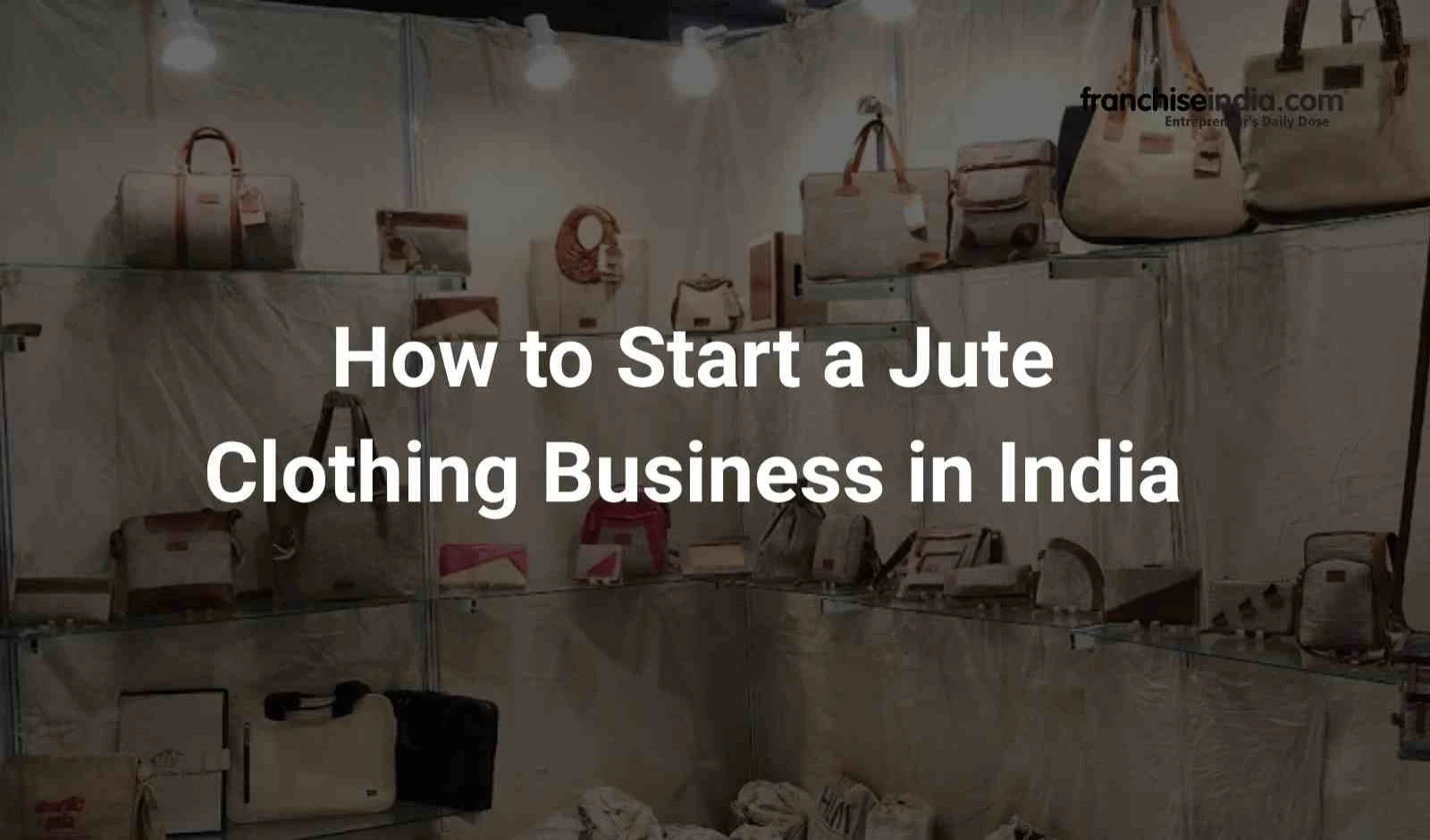
Starting a jute clothing business in India is a promising venture driven by the growing demand for sustainable fashion. India, being one of the largest jute producers, offers abundant raw materials and government support under schemes like Startup India and the National Jute Policy. You don’t need a massive investment to get moving, either. With ₹7–18 lakh, you can cover machinery, materials, and your first marketing push.
Here’s how it goes: register your business, find good-quality jute fabric (look at West Bengal or Assam for that), come up with some stylish designs, and lean into the eco-friendly angle. Selling online, through eco-boutiques, or even exporting, you’re looking at profit margins between 25% and 50%. You’ll have to pay attention to things like keeping the fabric soft and making sure people actually know about jute clothing. Still, because people are going greener and there’s real export potential, this space is only getting hotter. If you get your branding right, stick to sustainable production, and use digital marketing well, you can grow steadily—and help boost India’s green economy while you’re at it.
In this article we are going to discuss how to start a jute clothing business in India along with the investment required and risks that come with it. Read this article till the end to know everything related.
Also read: 15 Profitable Business Ideas to Start in Odisha in 2026
Steps for Starting a Jute Clothing Business
1) Business idea & product mix (what to sell first)
 (1).jpg)
Begin your jute clothing venture with a focused product range, then gradually expand. Start by producing core garments such as simple kurtas, tunics, A-line dresses, and straight trousers—a small unit can manage around 100–300 pieces per month. Once you’ve got that down, try branching out: add jackets, waistcoats, or layered garments; maybe mix in cotton linings or blended fabrics for comfort.
Accessories are another smart move—jute bags, belts, and hats usually give you higher profit margins and are easier to scale. If you’re eyeing niche or boutique markets, experiment with a premium, handwoven, or artisanal line and price it higher. For your first launch, keep it tight—6 to 12 SKUs works well. Maybe two men’s wear, two women’s wear, a couple of accessories—run a pilot batch of 50 to 200 pieces, see what people like, and tweak your designs before you go all in.
2) Market & pricing basics
 (2).jpg)
When starting a jute clothing business, define your market positioning; this choice affects everything: pricing, branding, and who you’re selling to. In India, jute clothes cover a wide price range. Simple kurtas or shirts usually go for ₹700 to ₹1,500, while tailored jackets or outerwear in the premium lane can hit ₹2,500 to ₹8,000 or even higher. Accessories like bags and belts? Anywhere from ₹400 to ₹2,500. Your pricing has to make sense—it should reflect what it costs you to make, the quality of your work, and what people think it’s worth. There’s also GST to think about: raw or woven jute is taxed around 5%, finished garments usually fall under 5% or 12%, depending on the product and its HSN code. Double-check the right HSN code and GST rate before you set final prices—ClearTax or government guides can help with that—so you don’t mess up your cost calculations or compliance.
3) How much capital to start
 (3).jpg)
Setting up a small production unit isn’t out of reach, especially if you start in a tier-2 or tier-3 city. You can begin really lean—maybe combine home-based stitching with outsourced weaving—and then grow into a proper factory setup later. You’ll need to rent or fix up a little workshop; expect a security deposit of ₹50,000 to ₹2 lakh. A basic power loom or handloom setup will set you back ₹1.5–3 lakh per unit, but you can skip that expense at first by just outsourcing the weaving. For stitching, plan on three to six industrial sewing and overlock machines—those will run you between ₹40,000 and ₹2.5 lakh, depending on what you pick. Don’t forget the supporting gear: cutting tables, ironing units, and small tools add another ₹25,000 to ₹80,000. You’ll need some working capital—₹1–3 lakh—to cover rent, salaries, and packaging. Add in raw materials and trims (₹50,000–₹2 lakh) and marketing or e-commerce setup (₹25,000–₹1 lakh), and you’re looking at total launch costs of ₹4–12 lakh. You can cut that back even more if you do made-to-order, outsource more, or use co-working manufacturing spaces.
Also read: How to Open a Hardware Component Business in 2026
4) Legal licenses & certifications
 (4).jpg)
To start a jute clothing business in India, certain registrations and certifications are essential. You’ll need GST registration (mandatory once you cross a certain turnover, but handy even before that) and MSME/Udyam registration to tap into loans and government subsidies. Depending on your setup, you might need a Shops & Establishment or Factory License. Don’t forget to register a trademark for your brand and logo, and grab an Import Export Code (IEC) if you want to sell abroad.
For extra credibility, apply for the Jute Mark India (JMI) label—this certifies your products have at least 50% jute fiber. Also, keep an eye on National Jute Board schemes for grants, training, and promo support. That’s pretty much the lay of the land. With the right approach, a bit of hustle, and a focus on quality and branding, you can carve out your spot in the jute clothing market.
5) Sourcing raw material & manufacturing
 (5).jpg)
If you’re starting a jute clothing business, you’ll need to figure out where to get your raw materials. Most people go straight to mills or wholesalers for hessian and fine jute blends—buying full rolls usually brings the price down, and places like TradeIndia or suppliers in Kolkata and Howrah are great options. For high-end collections, team up with artisan or handloom clusters in Bengal or Assam. They offer unique textures you just can’t find anywhere else. Blended fabrics, like jute-cotton or jute-silk (with 50–70% jute), make clothes more comfortable and still qualify for the Jute Mark label, which is a big credibility boost.
When it comes to actual production, you’ve got choices. You can handle everything in-house if you want control over quality, or go with outsourced job work if you want to keep your investment low. Many businesses mix both, but either way, keep a close eye on quality—check the GSM, shrinkage, finish, and how well the stitching holds up.
6) Production equipment & typical costs
 (6).jpg)
If you’re leaning toward some in-house production, you’ll need the right equipment. A small power loom runs about ₹1.5–3 lakh, depending on the brand and capacity. Starting with one or two (or leasing) is usually smart.
Industrial sewing machines cost ₹20,000–₹80,000 each, and an overlock (serger) machine goes for ₹13,000 to ₹55,000. Don’t forget a cutting table, steam iron, and pressing unit—budget another ₹25,000 to ₹1 lakh for those. If all that sounds like too much up front, you can always outsource weaving and stitching to local jobbers or small clusters instead.
7) Staffing & monthly running costs
 (7).jpg)
Monthly expenses aren’t sky-high for a small jute clothing unit, but it does depend on your scale and city.
Two tailors or machine operators will set you back ₹40,000–₹80,000 a month.
Add a cutter, packer, or dispatch helper for another ₹12,000–₹18,000.
Renting a small workspace, plus utilities, lands somewhere between ₹15,000 and ₹60,000 per month.
Set aside ₹10,000–₹50,000 for packaging, marketing, and pushing your brand online.
Put it all together, and your monthly operating costs will probably land between ₹80,000 and ₹2 lakh, depending on how big you go and where you set up shop. Keeping a small team at first makes it easier to stay nimble and avoid burning through cash.
Also read: 11 Business Ideas in Delhi with Low Investment
8) Sales channels & marketing (cost-effective tactics)
 (8).jpg)
Selling jute clothing works best if you mix up your channels.
Direct-to-consumer—your own website, Instagram, Facebook, even WhatsApp—means more profit per sale. But selling through marketplaces like Etsy, Amazon India, or Myntra gets you out there faster, though you’ll pay fees and face more competition.
Wholesale or B2B sales to boutiques, eco-stores, or corporate clients open up different opportunities. Don’t ignore pop-ups, craft fairs, or National Jute Board events—they’re great for getting noticed and talked about.
Social media and influencer campaigns usually run ₹10k–₹50k a month, product photography is a one-time ₹10k–₹25k, and eco-friendly packaging costs ₹20–₹80 per order. If your clothes use at least 50% jute, slap on the Jute Mark label—it really helps with trust.
9) Sample financials & break-even (worked example)
 (9).jpg)
Total monthly revenue would be:
Revenue = 200 × 1,200 = ₹2,40,000
Next, consider cost of goods sold (COGS), which includes fabric, labour, trims, and packaging. Assuming COGS is 40% of revenue:
COGS = 0.40 × 2,40,000 = ₹96,000
This leaves a gross margin of:
Gross Margin = Revenue − COGS = 2,40,000 − 96,000 = ₹1,44,000
Subtract monthly fixed costs such as rent, salaries, utilities, and marketing (estimated at ₹80,000):
Net Operating Profit = Gross Margin − Fixed Costs = 1,44,000 − 80,000 = ₹64,000
This example shows that selling 200 units per month at this price point is profitable. Adjusting prices, volumes, or COGS will affect break-even and profitability. These figures are illustrative—real costs should be based on actual quotes for accurate planning.
10) Funding options
 (10).jpg)
Most people start with their own savings or pitch in from family and friends, especially for small batches. MUDRA loans are tailored for micro-enterprises, and MSME bank loans can be easier to get if you have Udyam registration. For collateral-free options, look into CGTMSE or similar credit guarantee schemes. If your brand shows growth and a good digital presence, angel investors or seed funding might be possible. The government also steps in now and then, offering grants, subsidies, and skill programs through the National Jute Board or Jute Commissioner’s office. Keep an eye on official notices and jump on these schemes—they can help cover startup costs or fund marketing and tech upgrades.
11) Sustainability, design & comfort hacks
 (11).jpg)
Jute’s natural stiffness can limit its comfort and appeal for clothing, so modifications are essential for wearables. Blending jute with cotton or silk softens the fabric without losing that eco-friendly vibe. Brushing or softening finishes, plus adding cotton lining at spots like the shoulders or chest, really ups the comfort. Pre-washing or enzyme washes help with softness and keep shrinkage down, so the clothes feel better and last longer. Go for loose, breathable cuts—they’re on-trend and make jute way more wearable. All these upgrades add a bit to your costs, but they make a huge difference in how much people actually want to buy and wear your stuff. In the end, these tweaks make jute clothes not just sustainable but stylish and comfy enough for everyday life, which means you reach more customers and boost your sales.
Also read: How to Start a Tech Business in India
12) Quality control, testing & packaging
 (12).jpg)
For exports, ensure quality by lab-testing jute fabric for tensile strength and shrinkage. Packaging should reflect sustainability: use recyclable boxes or cotton pouches and include a story card highlighting key details, e.g., “Made of 60% jute, handwoven in [location], care: gentle wash.” That little story makes your brand stand out and highlights the eco-friendly, handmade feel. Add a barcode or QR code that links to more details about the product. People appreciate the transparency, and it helps build trust. When you present your clothes this way, you’re not just following the rules—you’re making your brand look good and adding real value to your pieces.
13) Risks & mitigation
 (13).jpg)
Key risks in a jute clothing business include raw material price volatility, which can be managed by maintaining 4–6 weeks of inventory or securing long-term supplier contracts. Keep an eye on government rules—sometimes they bring in new limits or stability measures. Pay attention to what customers want, too. If you focus on comfort—using blends, linings, and smart designs—people are more likely to give jute a try. And don’t ignore taxes, as GST and other tax changes can mess with your pricing, so check for updates now and then. Staying on top of these risks keeps things running smoothly and helps your business grow.
What’s next
Starting a jute clothing business in India actually makes a lot of sense. You get access to plenty of raw material, there’s government backing, and more people want eco-friendly fashion these days. There’s room to sell both locally and abroad, and the trick is planning—pick your products wisely, manage your costs, focus on quality, and use different sales channels. Blending jute with other fabrics, putting thought into your designs, and building a solid brand help you get past jute’s rough edges and attract more customers. With the right paperwork, funding, and a handle on risks, even a small or mid-sized business can turn a profit pretty quickly. Start simple, test the market, and grow from there. You’ll end up with a smart, sustainable business that supports green fashion and helps India’s eco-economy thrive.
You might also like: How to Start a Small Clothing Business from Home