 3333
/ 10
Min Read



No matter how expensive or trendy your outfit is, accessories are what really make it pop. They’re the final touches that can transform an outfit from everyday to unforgettable. It could be a necklace you picked up at a flea market, a super simple bag, or fancy sunglasses; accessories showcase personality and make a brand memorable.
Starting a fashion accessory business presents a unique opportunity by giving you the freedom to explore your creative side, combined with a solid commercial opportunity. The market for accessories has low barriers to entry, near limitless possibilities, and lucrative online demand. Consumers are increasingly drawn to smaller, ethical, and quirky brands over mass-produced products.
If this sounds like your dream, you’re in the right place. This article will guide you through the whole process of opening your own fashion accessory business.
Also read: How to Start a Bookstore Business in India
Understanding the Fashion Accessory Market
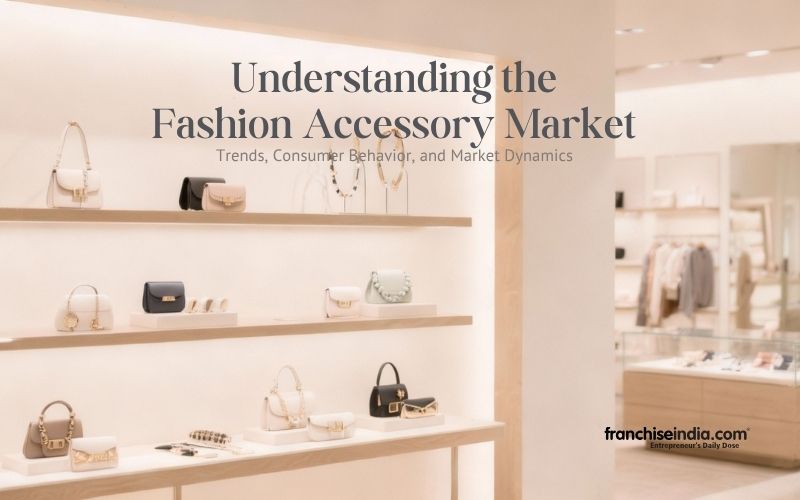
Before you begin sketching or making samples, you need to analyze the accessory market. Accessories are not simply a utility. They serve the purpose of allowing the wearer to express more of themselves.
Trends to watch in 2026:
- Accessories made from eco-friendly materials, such as cork, bamboo, and recycled metal.
- Simple jewelry and bags made in soft colors.
- Styles that fit everyone, regardless of gender.
- Items that can be personalized, such as engraved pendants, monograms on bags, and custom keychains.
Globally, the fashion accessory industry is worth tens of billions of dollars, with strong growth through online sales. In India and Southeast Asia, the growing demand for fashion accessories is being accelerated by social media and local fashion brands.
This means that knowing and deciding your audience is important. Are you designing items for college students, working professionals, or environmentally responsible consumers? Once you know your targeted audience, all other decisions about the business will be more focused and effective, from design to packaging.
Profit Margins and ROI
Fashion accessories are one of the few product categories with very high profit margins, typically 50–70%, depending on materials and brand. For example, a handmade earring may cost you ₹100–₹150 in materials, but you can retail this product anywhere between ₹400–₹600 if you market it as designer or eco-friendly.
You can expect to see returns in less than a year if you are wise about your sourcing and reinvest your profits into marketing. You should also rely on repeat customers and word-of-mouth, which can be the best growth strategy in this industry.
Steps to Start Your Fashion Accessory Business
.jpg)
Finding Your Niche
The most successful accessory brands all start by focusing on one niche. Instead of trying to sell every type of accessory, you'll want to select one or two categories to really work on growing and selling, then eventually expand.
You could choose from popular niches such as:
- Jewelry: Handmade earrings, resin pendants, silver jewelry, or statement pieces.
- Bags: Vegan leather totes, embroidered sling bags, or functional laptop sleeves.
- Hair Accessories: Scrunchies, clips, headbands, scarves, anything that is trendy.
- Sustainable Fashion: Recycled jewelry, cork wallets, or upcycled denim bags.
- Personalized Gifts: Name bracelets, birthstone pendants, or engraved watches.
Consider your own personal passion and needs when choosing your niche. Combining your passion with market demands can allow you to create a true DIY-to-business model. If you love design, then focus on handmade jewelry; if you love function + styling, you'll want to focus on bags or wallets.
Building a Business Plan
A solid business plan can transform your creative passion into a clear and actionable strategy. It helps you allocate a budget for costs, establish benchmarks and goals, and even seek funding if needed.
Key components to include:
- Vision and Mission: Define what your brand stands for. Are you focused on sustainability? Empowerment? Luxury? Affordability?
- Product line: You are allowed to start small. Start with 10-15 pieces in your collection, then test which piece sells the most.
- Pricing Strategy: Cost-based pricing (cost for materials + labor + margin) is one method. Or value-based pricing (the price is based on how much someone is willing to pay for it, or the perceived value).
- SWOT Analysis: Identify your strengths (you have unique designs), weaknesses (you may not have large enough audiences), opportunities (growth of e-commerce), and threats (competition and/or fast-paced changes in trends).
Example: If the average cost to make a bracelet is ₹100, but you price the bracelet at ₹400–₹500, that gives you an outstanding profit margin of 70–75%. Accessories are usually a great, high-profit-margin product type, making them a smart small-business category.
Legal Setup and Registrations
Even accessory businesses, no matter how small, will need some basic legal framework to operate professionally.
- Business Registration: You must choose whether your company is a sole proprietor, LLP, or private limited company.
- GST Registration: Applicable in India if the annual turnover exceeds ₹40 lakh.
- Trademark Registration: Protect your brand name and logo.
- Import/Export license: If you're selling internationally.
- Contracts: Draft clear agreements with vendors or artisans.
Estimating Costs and Setting Your Budget
The size of your investment will depend on the size of your business.
- For a home-based startup: Your investment will likely be in the range of ₹50,000-₹1,50,000 for raw materials, limited machinery/equipment, branding, and packaging.
- For a smaller-sized boutique/studio: You may need a budget of approximately ₹3-₹5 lakh for your inventory, furniture, marketing, and basic e-commerce setup.
- For an online brand with manufacturing: The budget can be roughly ₹5-₹10 lakh for production, website, and logistics.
Expense Breakdown:
- Raw materials and design tools
- Packaging and branding materials
- Website and/or Marketplace Fee
- Photography and Digital Marketing
- Business Licenses, GST Registration, Trademarking
Remember that the visual representation of your product is important. So, making an investment in great product photography and packaging can multiply your perceived value immediately.
Also read: 11 Profitable Home Supplies Business Ideas
Designing and Sourcing Your Products
This is the point where creativity meets practicality. Start by researching trends and materials, and sketching designs that address your area of focus.
Designing Process:
- Research seasonal trends by investigating platforms like Pinterest, Vogue, or WGSN reports.
- Create sketches or a digital copy of your designs.
- Make prototypes to assess quality, color, and comfort.
- Get feedback from friends or your sample customers before final production.
Sourcing Options:
- Buy raw materials from local wholesale markets, i.e., Sadar Bazaar (Delhi) or Crawford Market (Mumbai).
- Use B2B platforms such as IndiaMART, TradeIndia, or Alibaba for bulk supplies.
- Find local artisans in your area who would work with you on a small scale and ethically manufacture handcrafted products.
Building Your Brand Identity
In fashion, your brand is your product. A strong brand identity transforms one-time customers into loyal fans.
- Brand Name: They should be short, memorable, and express your style.
- Logo and Visual Palette: Determine a palette of colors and a font family that aligns with your brand’s values. Premium brands can use luxurious black and gold, and eco-brands' earthy colors.
- Brand Story: Share with people your motivation for creating your brand. Maybe you want to support artisans, reduce waste, or create confidence through style.
- Packaging: Use elegant and environmentally responsible packaging. Use recycled boxes, branded cloth pouches, and thank-you notes.
For example, A minimalist jewelry brand can opt for soft pastel packaging and clean, simplistic photography, while a boho label may include textured kraft boxes with vibrant, colorful tags.
Creating an Online Presence
No modern fashion brand can survive without an effective digital footprint.
- Create a Website: Services like Shopify, Wix, or WordPress will allow you to set up an online store professionally, without needing to be a programmer. Use high-resolution photos, proper descriptions, and a secure payment method.
- Use Social Media Platforms: Instagram and Pinterest are two powerful social marketing platforms for fashion. Post visually stunning content, product shots, styling videos, behind-the-scenes, and customer reviews. Interact with your audience in stories and reels.
- E-Commerce Platforms: Market your products through online marketplaces such as Amazon, Flipkart, or Nykaa Fashion. Start small, experiment, try different products to see if the audience is interested, then adjust your listings based on what the reviews say.
- SEO and Content Marketing: Use keywords such as “affordable handmade jewellery,” “vegan leather bags,” or “Indian fashion accessories online” to attract organic traffic.
Marketing and Promotion Strategies
.jpg)
No matter how good your product is, if people don’t know about it, it will not sell. Marketing is where you can really be creative beyond the product.
Effective strategies include:
- Influencer Collaborations: Send your products to micro or nano influencers, 10k-50k followers, who tend to receive high engagement and can work within your budget.
- User-Generated Content: Encourage your customers to post pictures of themselves wearing your products. This builds authenticity and trust around real people.
- Email Marketing: Send curated lookbooks, early access to collections, and discount codes.
- Pop-Up Events: Partner with your local flea markets, craft fairs, or exhibitions and showcase your product in an offline market.
- Seasonal Campaigns: Create unique collections for Diwali, Christmas, Valentine’s Day, or Women’s Day. These are the biggest shopping occasions in the calendar year.
Distribution and Sales Channels
As soon as orders start coming in, making sure that every order is smoothly delivered becomes important. You can sell through multiple channels at the same time:
- Online: Your website, Instagram shop, or online marketplaces.
- Offline: Collaborate with local boutiques or concept stores.
- Wholesale: Supply to retailers or curated stores for bulk orders.
- Exports: Sell on Etsy or offer international shipping. Handmade Indian accessories are popular abroad.
Make sure that your packaging is safe, shipping times are reasonable, and customer service is responsive. In the fashion world, reputation travels quickly, both positive and negative.
Also read: How to Start a Food Truck Business
Scaling and Growth Opportunities
Once you’ve found your audience, it is time to grow properly.
- Introduce Seasonal Collections: Every 3 to 4 months, drop a limited-edition collection, so that there’s always something to keep them excited.
- Add Variety to Your Offerings: Add complementary items to your offerings (e.g., if you sell earrings, launch pendants or bracelets that go with the earrings).
- Collaborate with designers: Joint collections increase credibility.
- Invest in Branding: Rebrand your packaging, refresh your look, and work with a stylist for an editorial photo shoot.
- Go Global: All platforms (Etsy, Instagram, Shopify) have an easy shipping process for international selling.
Continue to analyze your sales; know which colors, designs, or price points were most popular and do it again. Remember, growth in fashion is evolution, not just expansion.
Launching a fashion accessory business is an incredibly thrilling entrepreneurial journey that combines creativity, strategy, and storytelling in one rewarding process. You don’t need to invest in a large factory or have a huge budget to begin; you simply need a niche, a consistent brand identity, and a good sense of detail.
This marketplace rewards originality and authenticity. So have fun, experiment, and create something for your own unique sense of style. All those small steps from your first sketch to your first sale add up to something truly fashionable. You can create a brand that turns your passion into profit.
You might also like: 9 Trending Sports and Gaming Business Opportunities with High ROI